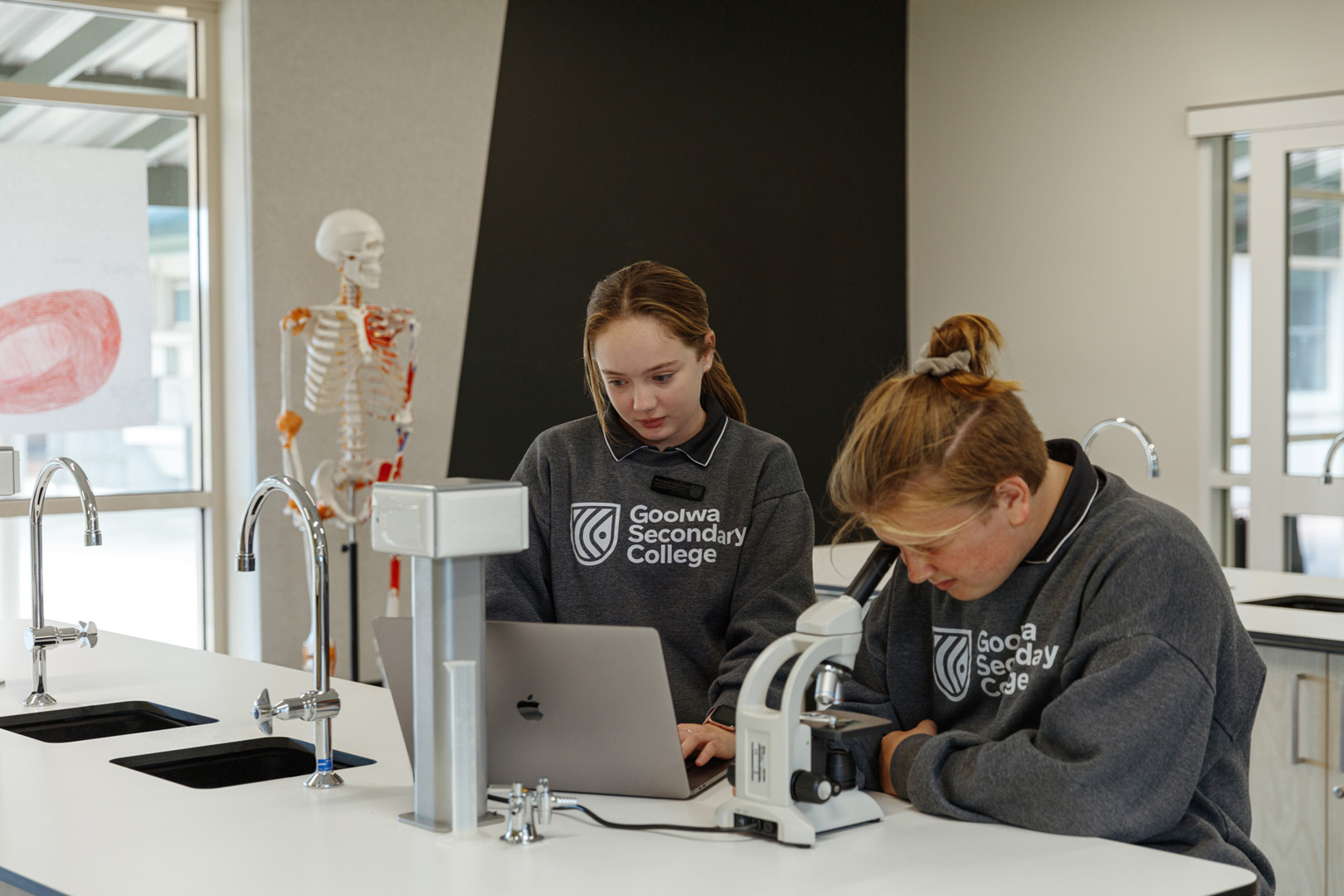
Stage 1 Biology
Year 11 Biology A
Subject Overview
The study of Biology is constructed around inquiry and application of understanding the diversity of life as it has evolved, the structure and function of living things, and how they interact with their own and other species and their environments.
Students explore the dynamic nature of biological science and the complex ways in which science interacts with society, to think critically and creatively about possible scientific approaches to solving every day and complex problems and challenges.
Topics may include:
Creatures, plants and their interactions:
- The structure and function of human, other animal, and/or plant systems.
- The structure and function of various organ systems that facilitate the exchange of materials in human beings and other species, including specific attributes of the circulatory, respiratory, excretory, and digestive systems in animals.
- Diverse ecosystems, looking at ecosystem dynamics, including interactions within and between species, and interactions between abiotic and biotic components of ecosystems.
Assessment
The following assessment types enable students to demonstrate their learning in Stage 1 Biology:
Assessment Type 1: Investigations Folio
- one practical investigation
- one investigation with a focus on science as a human endeavour
Assessment Type 2: Skills and Applications Tasks
- one assignment
- at least one test/exam
Additional Information
Students can choose to participate for a single semester (either A or B) or for both Semesters (A and B). If students would like to study Biology in Year 12 / Stage 2, it is highly recommended that students select both Biology subjects.

Year 11 Biology B
Subject Overview
The study of Biology is constructed around inquiry and application of understanding the diversity of life as it has evolved, the structure and function of living things, and how they interact with their own and other species and their environments.
Students explore the dynamic nature of biological science and the complex ways in which science interacts with society, to think critically and creatively about possible scientific approaches to solving every day and complex problems and challenges.
Topics may include: Cells and Diseases
- That cells possess some common features.
- The development of the cell theory, the exchange of materials, and processes required for cell survival.
- Ways in which matter is recycled and energy is transformed and transferred in the biochemical processes of photosynthesis and respiration.
- The various agents that can cause infectious diseases, including viral, bacterial, and other parasitic pathogens.
- How infectious disease agents spread, enter hosts, and cause immune responses.
- The structure and function of the main components of the immune system.
Assessment
The following assessment types enable students to demonstrate their learning in Stage 1 Biology:
Assessment Type 1: Investigations Folio
- one practical investigation
- one investigation with a focus on science as a human endeavour
Assessment Type 2: Skills and Applications Tasks
- one assignment
- at least one test/exam
Additional Information
Biology will run over both semesters in 2025, with an A and a B option. A semester will be worth 10 SACE points. Students can choose to participate for a single semester (either A or B) or for both Semesters (A and B). If students would like to study Biology in Year 12 / Stage 2, it is highly recommended that students select both Biology subjects.
